Blog article
Online Gambling Addiction in South Africa: Signs and Help
Online gambling can shift from entertainment to harm quietly. Learn how to recognise the warning signs, take back control and access free support in South Africa.
When online gambling stops feeling like a choice
Online betting is available around the clock. A person can place a bet from a phone, deposit money in seconds and continue gambling without anyone around them noticing. What starts as occasional entertainment may gradually become a pattern of chasing losses, hiding transactions and gambling with money needed for everyday life.
Online gambling addiction is not a lack of discipline or a character flaw. Clinically, gambling disorder involves repeated gambling that continues despite serious problems in a person's finances, relationships, work or wellbeing. The harm can affect anyone, including people who appear successful and in control in other areas of life.
If gambling is causing harm, it is worth acting now. You do not need to wait until you have lost everything before asking for help.
Why online gambling can become difficult to control
Online platforms remove many of the natural stopping points associated with gambling at a physical venue. Betting is private, fast and continuously available. Promotions, notifications, live odds and instant deposits can keep a person engaged long after they planned to stop.
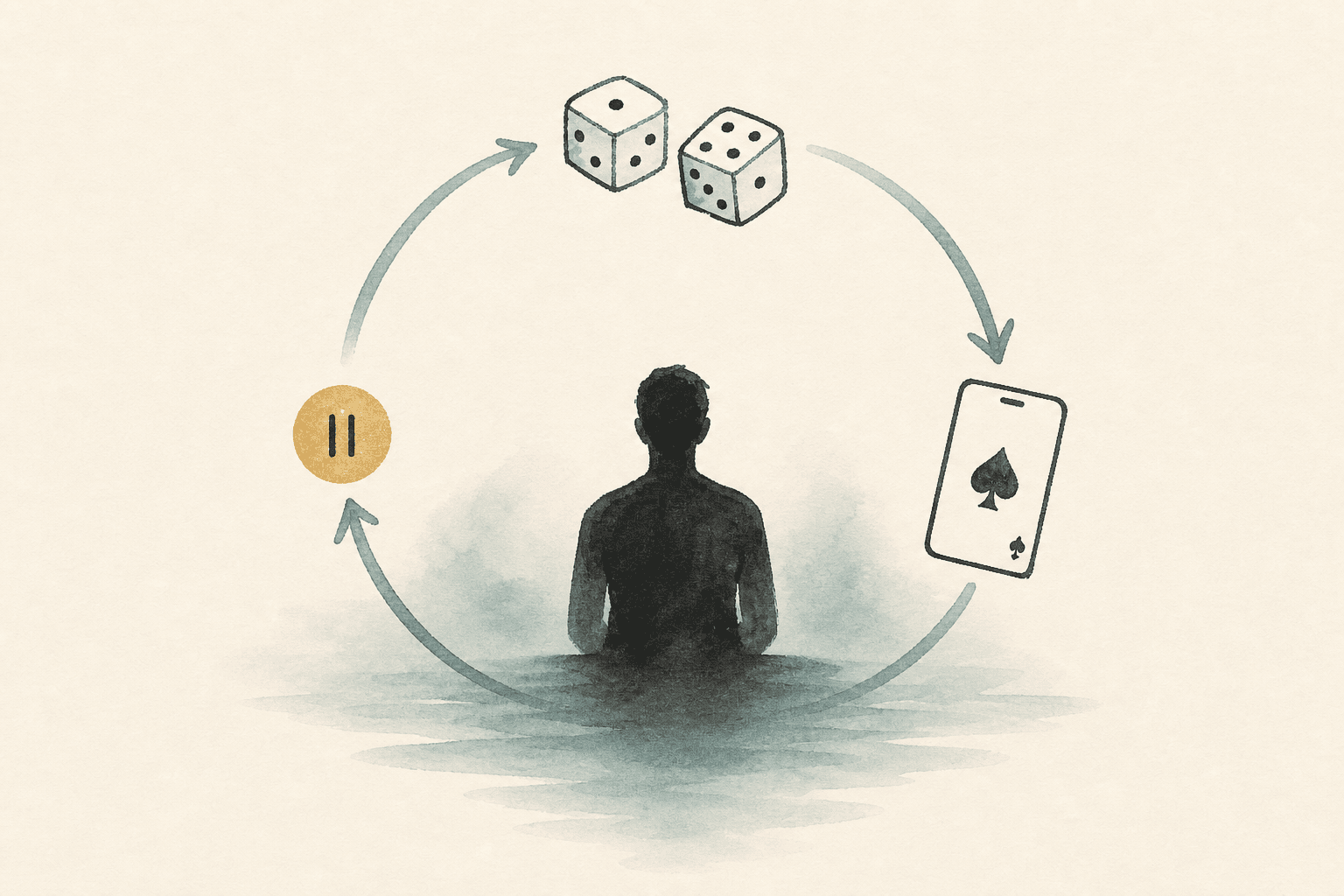
The emotional cycle can become just as powerful as the financial one. A win may create excitement and confidence, while a loss may trigger an urgent need to win the money back. This is known as chasing losses. Because each result is uncertain, the next bet can feel like the one that will repair the damage—even when further betting is making the situation worse.
Stress, loneliness, boredom, anxiety and financial pressure may also become triggers. Gambling can briefly distract from difficult feelings, but the losses and secrecy often create even more distress afterward.
Warning signs of online gambling addiction
One sign on its own does not necessarily mean that a person has a gambling disorder. A pattern of several signs, however, should be taken seriously:
A useful question is not only, “How much am I gambling?” but also, “What is gambling costing me beyond money?” Consider the impact on trust, time, concentration, health and peace of mind.
- Spending more time or money gambling than intended
- Repeatedly trying to cut down or stop without succeeding
- Chasing losses or increasing bets to recover money
- Borrowing money, using credit or selling possessions to gamble
- Using money intended for rent, food, transport, debt or school fees
- Hiding betting activity, bank statements or losses from loved ones
- Feeling restless, irritable or anxious when trying not to gamble
- Gambling to escape stress, sadness, loneliness or other difficult feelings
- Neglecting work, studies, sleep, relationships or responsibilities
- Believing that one large win will solve growing financial problems
What to do if you are worried about your gambling
Recovery often begins by making gambling less accessible and bringing another person into the situation. You can take the following steps today:
These barriers are not a substitute for treatment, but they can create breathing room while support is put in place. You can also complete the South African Responsible Gambling Foundation's anonymous self-assessment. It is a screening tool, not a diagnosis.
- Pause access. Log out of betting accounts, uninstall gambling apps and switch off promotional notifications.
- Ask about self-exclusion. Self-exclusion can formally restrict access to gambling. The South African Responsible Gambling Foundation offers free self-exclusion support.
- Protect essential money. Move debit orders and essential expenses into a separate account. Ask a trusted person to help monitor finances if it is safe and appropriate.
- Stop chasing losses. Money already lost cannot be safely recovered through another bet. Treating gambling as a solution to gambling debt usually deepens the harm.
- Tell someone you trust. Secrecy gives the cycle room to continue. Choose a calm person who can support practical next steps without taking over or shaming you.
- Get professional support. Counselling can help identify triggers, manage urges, repair harm and build a realistic recovery plan.
Free gambling support in South Africa
The South African Responsible Gambling Foundation provides free, confidential assistance to people experiencing gambling harm and to affected family members. Its counselling line operates 24 hours a day, seven days a week, and can provide information, assessment and referral to treatment professionals across South Africa.
If you feel at risk of harming yourself or someone else, contact emergency services immediately or go to the nearest hospital emergency department. A gambling helpline is valuable support, but it is not a replacement for emergency care.
- Toll-free counselling line: 0800 006 008
- WhatsApp: 076 675 0710
- Online referral: National Responsible Gambling Programme digital referral
- Self-exclusion information: How self-exclusion works
How family members can help without funding the gambling
Discovering hidden gambling can bring anger, fear and broken trust. It is possible to care about the person while setting firm boundaries around money.
Promises alone may not be enough when access remains easy and triggers are unchanged. A practical plan should combine support, financial safeguards, reduced access and accountability.
- Speak about specific behaviour and its impact rather than labelling or humiliating the person.
- Do not lend money for another bet or pay gambling debts without a wider financial plan.
- Secure shared accounts, cards, passwords and important financial documents where necessary.
- Encourage professional help and offer to sit with the person during the first call.
- Seek support for yourself; family members can also contact the responsible-gambling helpline.
Recovery is possible
Online gambling addiction can feel isolating, especially when losses and secrecy have accumulated. But the situation can change. Asking for help is not an admission of failure—it is a decision to interrupt the cycle.
Start with one action: make the call, send the WhatsApp message, begin self-exclusion or speak honestly to someone you trust. For additional guidance, contact our team confidentially or explore our addiction recovery programmes.
This article is for general educational purposes and is not a diagnosis or a substitute for individual medical, psychological, legal or financial advice.