Blog article
The Core Pattern Behind All Addictions
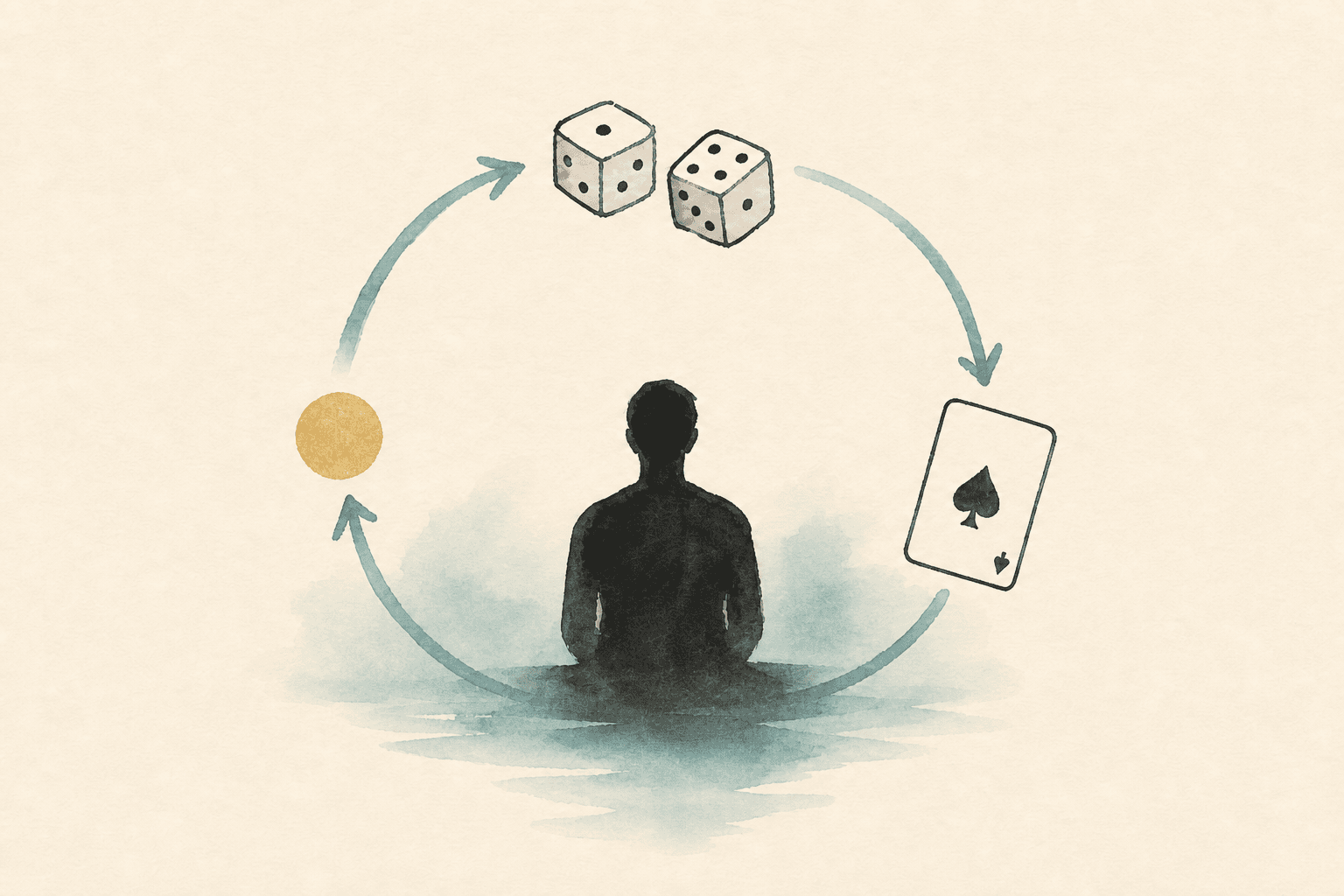
Different addictions may look completely different on the surface – alcohol, gambling, social media, work – but underneath, they follow the same repeating mechanism.
Overview
Different addictions may look completely different on the surface – alcohol, gambling, social media, work – but underneath, they follow the same repeating mechanism.
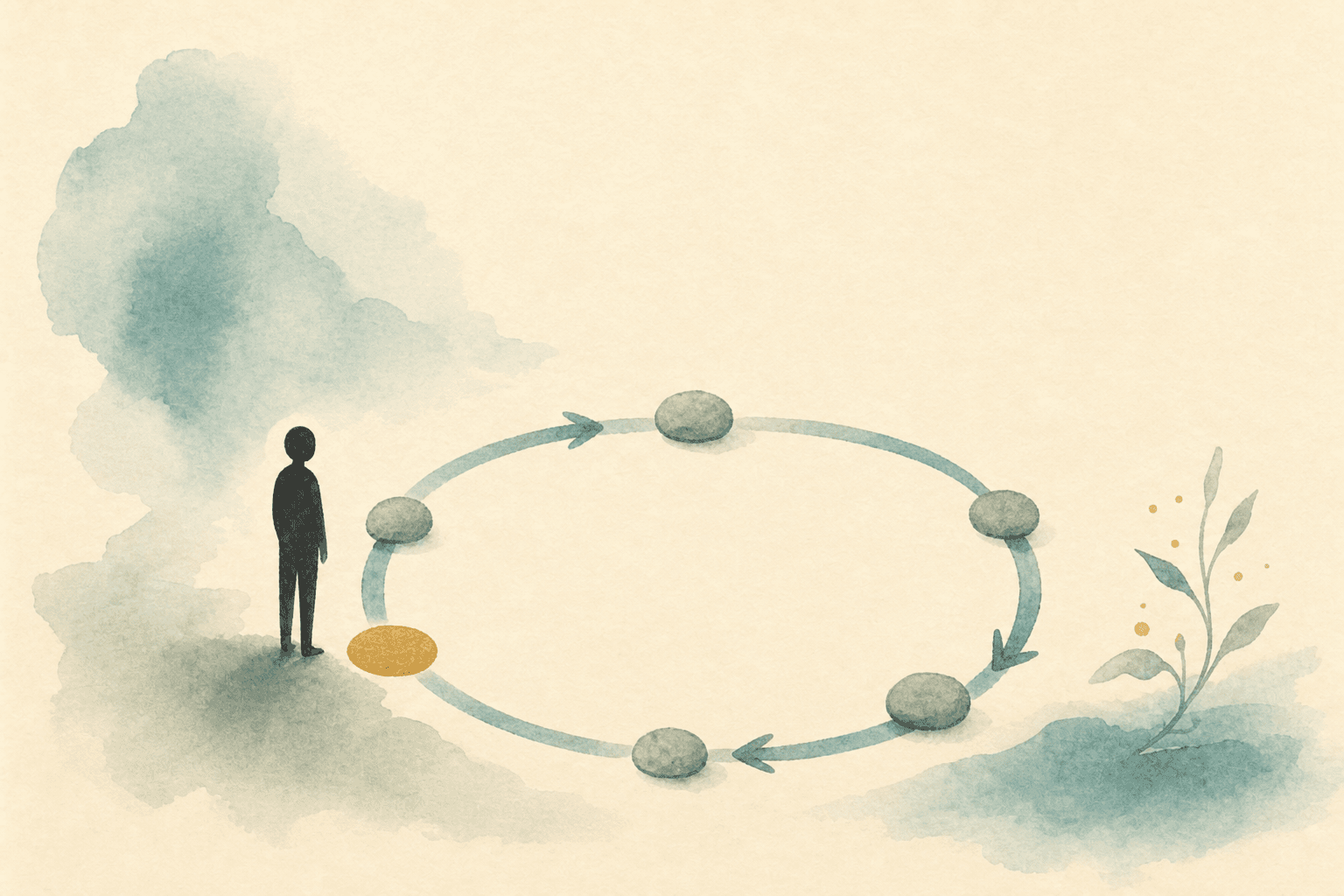
The universal addiction loop
At the center of almost every addiction is a reinforced behavioral cycle:
1. Trigger (Cue)
Something creates discomfort or urge
2. Craving (Urge)
The brain remembers: “This worked before”
3. Behavior (Action)
You act to relieve the craving
4. Reward (Relief / Pleasure)
This is the hook
5. Reinforcement (Learning)
The loop becomes faster and more automatic
6. Consequences → Repeat
And the cycle continues
- Stress, boredom, loneliness, habit, environment
- Internal (emotion) or external (situation)
- Desire to change how you feel
- Anticipation of relief or reward
- Drinking, scrolling, gambling, eating, etc.
- Dopamine release
- Temporary relief, escape, or stimulation
- Brain strengthens the pathway
- “Next time, do this again”
- Guilt, fatigue, stress, withdrawal
- These often become the next trigger
How different addictions fit the same loop
Different actions—same mechanism.
Why this matters
If you only focus on the behavior (e.g. “stop drinking” or “use phone less”), you miss the real issue:
Where real change happens
To break the cycle, you intervene at key points:
- Avoid or redesign environments
- Reduce exposure
- Pause (even 5–10 minutes)
- Awareness: “This is a pattern, not a command”
- Healthier alternative (walk, call someone, breathe)
- Must provide some reward, not just restriction
- Add friction (block apps, remove access)
- Delay gratification
- Consistency builds new patterns
- The brain learns what you repeat—not what you intend
The deeper truth
Addictions are less about the substance or activity and more about:
A grounded perspective
You don’t “break” addiction in one move—you out-train the loop.
Same brain. Same system. New patterns.